Metals
Find the early warning signs in your furnaces, casters, rolling mills, cooling systems, fans, drives, and process lines before they become downtime, quality loss, or another unanswered shift handoff. Grayson TimeSeries Lite runs deterministic analysis inside Microsoft Copilot and explains what is changing in plain English.
No new subscription. Runs on your existing Microsoft 365 Copilot license.


Use Cases
The warning signs are already in your processing data
Steelmaking and metals production teams are surrounded by historian data, but the people closest to the process often do not have time to manually trend every furnace, caster, mill stand, cooling circuit, hydraulic system, fan, and drive signal. Early warning signs get buried in CSV exports, dashboards, alarm screens, shift notes, and daily reports.
Grayson TimeSeries Lite helps engineers, operators, and reliability teams ask direct questions of that data and get evidence-based answers backed by deterministic models.
The cost: A seized caster roll segment can scratch slabs, force an unplanned segment change, disrupt casting, or contribute to a breakout risk that stops production and creates a serious safety event.
What Grayson does: Tracks roll segment drive motor current, torque, roll gap, strand speed, mold thermocouples, and cast-to-cast variation to surface the slow resistance climb that can point to bearing degradation or developing roll seizure.
Ask Grayson: “Here are the last 30 casts of drive motor current and torque for every roll segment on Caster 2. Is any segment showing a sustained upward resistance trend that does not match the others?”
Outcome: Help the reliability engineer prove whether one segment’s slow current and torque climb is real, statistically significant, and different from normal cast-to-cast variation.
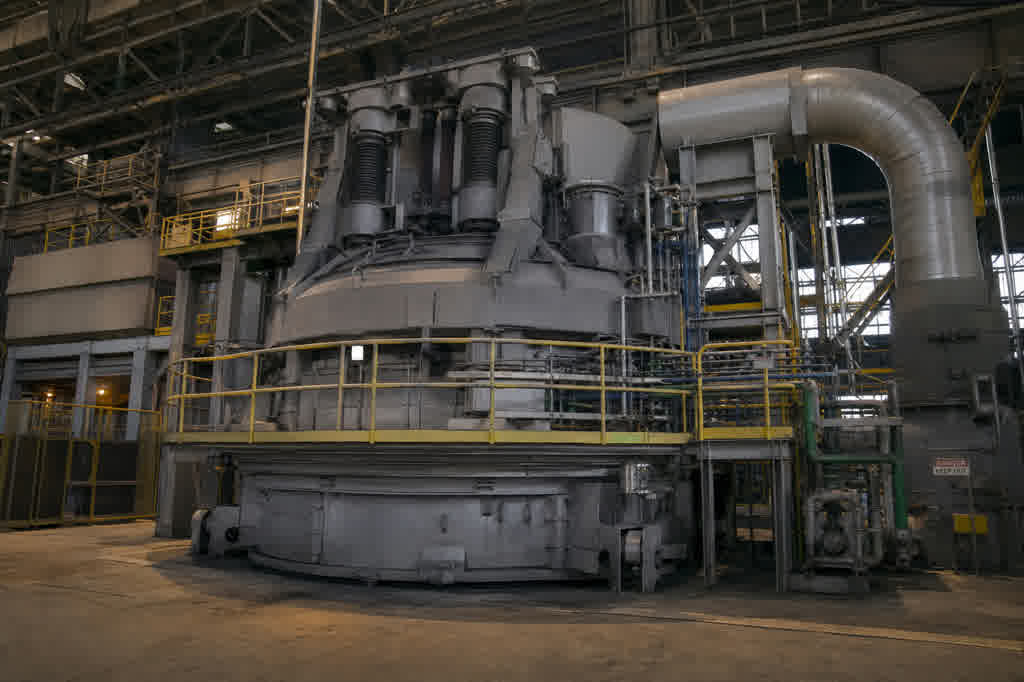
The cost: Cooling problems on blast furnace staves or EAF water-cooled panels can look like routine circuit issues until they become lining damage, panel cracking, water-ingress risk, or a campaign-threatening temperature excursion.
What Grayson does: Correlates outlet temperature, inlet temperature, delta-T, coolant flow, differential pressure, shell thermocouples, and offgas readings to distinguish routine cooling-circuit noise from patterns consistent with lining wear, panel degradation, or a developing thermal fault.
Ask Grayson: “Compare the last 30 days of cooling outlet temperatures, flow, delta-T, and nearby shell thermocouples across this furnace zone. Are any staves or panels drifting in a way that suggests lining wear or panel degradation rather than a normal circuit issue?”
Outcome: Help the furnace engineer or operator validate whether “this cooling circuit doesn’t look right” is backed by a coherent thermal pattern across temperature, flow, delta-T, and adjacent process signals.
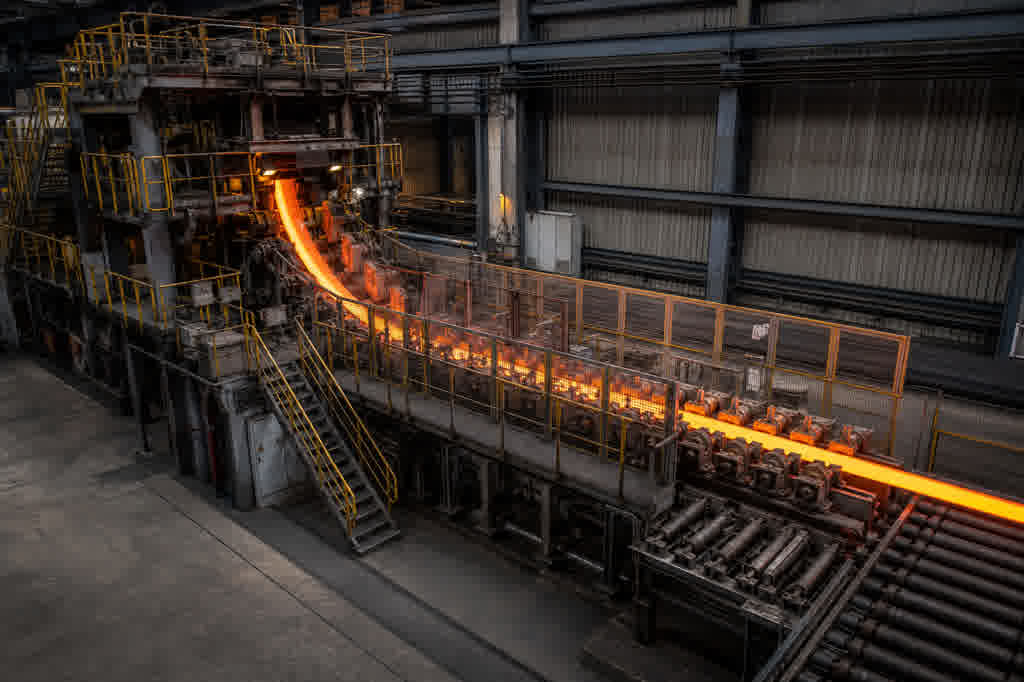
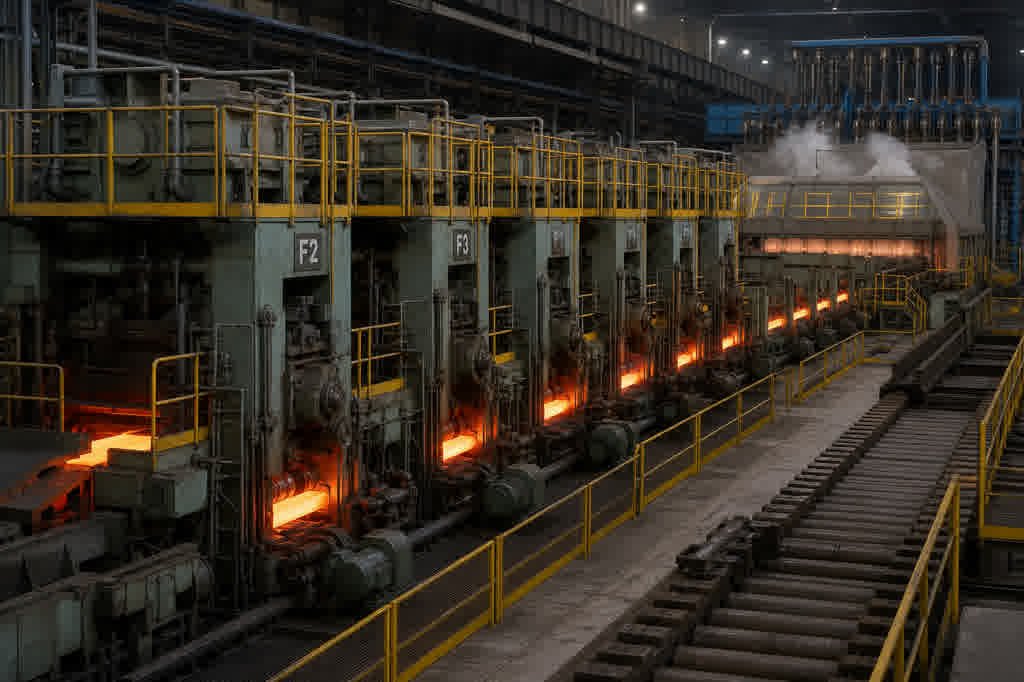
The cost: Rolling mill instability can create thickness variation, surface defects, chatter marks, reduced speed, accelerated bearing and gearbox wear, and recurring shift-to-shift quality issues that are difficult to explain from one dashboard view.
What Grayson does: Tracks main drive motor current, torque, gearbox vibration, bearing temperature, oil pressure, HAGC servo-valve command and feedback, roll force, strip thickness, speed, and tension to surface patterns consistent with drive degradation, servo-valve lag, chatter, torsional instability, or abnormal operating variance.
Ask Grayson: “Compare roll force, strip thickness deviation, HAGC valve command and feedback, stand vibration, torque, and speed for the last five shifts. Is the variation consistent with servo-valve degradation, drive instability, or rolling mill chatter?”
Outcome: Help the process or maintenance team verify whether quality drift and unstable mill behavior are supported by the data, instead of relying on screenshots, shift notes, or normal product-mix explanations.
How it works
How It Works
The Agentic Advantage
Agents expand your capacity.
A force multiplier for the engineer: your shift, your call, more answers in your hands..
FAQ
Answers to help you get started faster.
Real stories from teams who streamlined their workflow and delivered more with less.