
Cement & Building Materials

Self-Service Industrial Time Series Analytics for Cement and Building Materials

Find the patterns behind rising preheater differential pressure, changing grinding energy per ton, and recurring asphalt-plant baghouse excursions before they become another long historian review or spreadsheet exercise. Grayson TimeSeries helps cement and building-materials teams investigate prepared historical process data inside Microsoft Teams using deterministic and auditable analysis.

Get answers, quickly, by chatting with your industrial process data inside Microsoft Teams.

Self-service industrial time series analytics

Ask Your Data. Get Answers Now. In Teams.

Get fast, trustworthy answers from prepared historical pyroprocessing, grinding, dust-collection, quality-context, and production data through conversation, with no new dashboard, no coding, and no report queue.

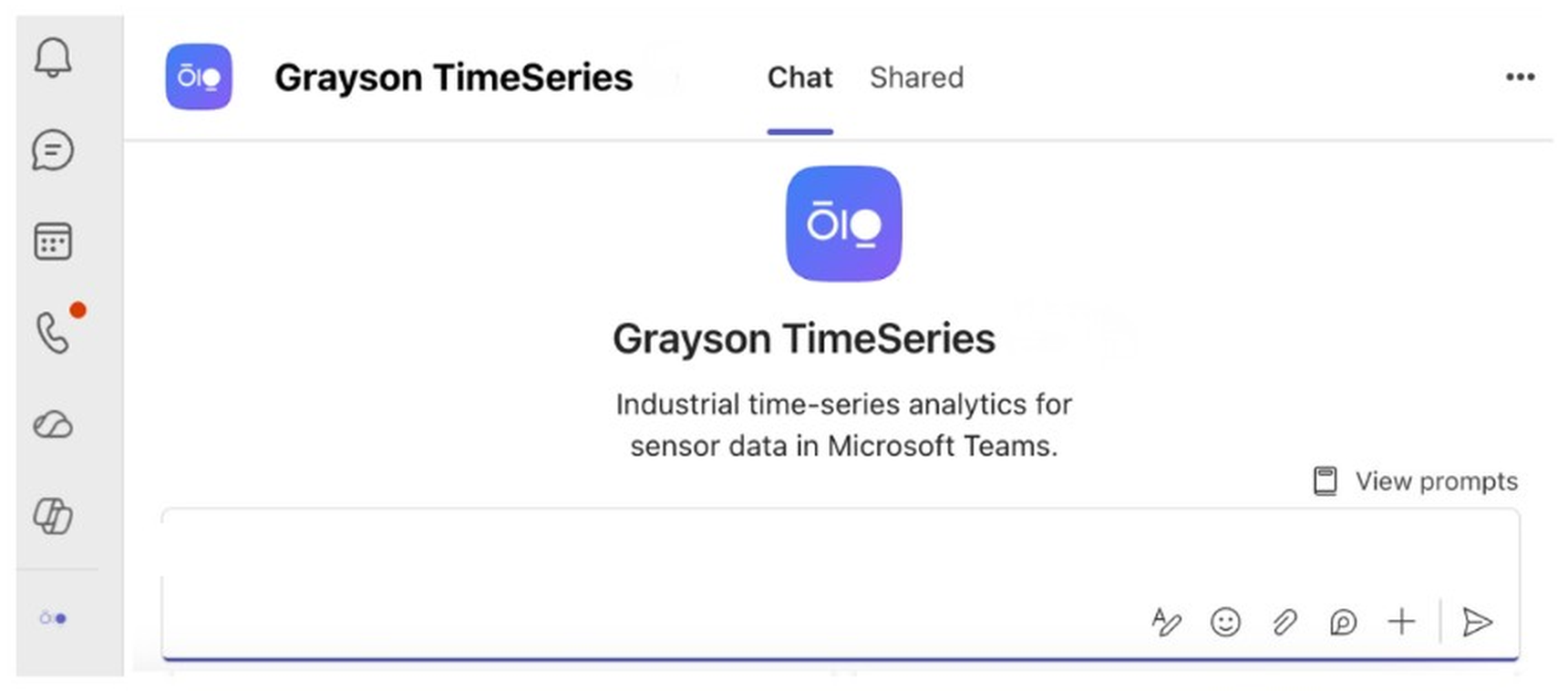
Grayson TimeSeries welcome screen in Microsoft Teams
Use Cases

The answers are already in your cement and building-materials data

Cement and building-materials teams work across DCS trends, historian exports, weigh feeders, drives, pressure transmitters, quality samples, product grades, alarms, and maintenance records. The evidence behind a gradual draft restriction, a specific-power shift, or a recurring baghouse pattern can remain hidden when operating context and prepared engineering metrics are reviewed separately.

Grayson TimeSeries helps the people closest to the problem ask direct questions of one prepared CSV or Excel file and receive evidence-based answers backed by deterministic, reproducible analysis.

Lower-Stage Preheater Differential-Pressure Drift

The cost: A gradual change in the gas-path pressure relationship can reduce operating margin and trigger repeated troubleshooting, but raw pressure trends are difficult to interpret when feed rate, fan speed, kiln state, and maintenance events also change.

What Grayson does: Compares lower-stage cyclone or duct differential pressure with kiln feed rate, ID-fan speed or damper position, calciner temperature, operating state, and any prepared normalized pressure ratio. Trend, anomaly, correlation, and period comparison can show whether the recorded pressure relationship changed during comparable production.

Ask Grayson: “Compare lower-stage differential pressure between the baseline and current periods while kiln feed and ID-fan speed remain within comparable ranges. When did the relationship begin to shift?”

Outcome: Help the kiln or process engineer identify the strongest periods for inspecting gas-path restrictions, dip tubes, meal pipes, air cannons, sensors, and fan operating context.

Lower stages of a cement suspension preheater tower with cyclone vessels and meal pipes

Cement Grinding Specific Power at Comparable Product Grades

The cost: Mill motor power alone does not show energy used per tonne, and product fineness, clinker grindability, feed rate, separator operation, circulating material, and mill condition can all influence the result. Teams often spend hours preparing and comparing the right operating windows.

What Grayson does: Analyzes a prepared file containing mill power, fresh-feed rate, prepared specific power in kWh/t, separator speed, elevator current or another documented circulating-load indicator, product grade, Blaine or other quality context, and stable-operation flags. Period comparison, correlation, lead-lag analysis, and trend analysis can show which historical relationships changed.

Ask Grayson: “Compare prepared specific power for the same product grade across the baseline and current periods. How did separator speed, fresh-feed rate, and bucket-elevator current differ?”

Outcome: Give grinding and quality teams an evidence-based starting point for reviewing feed characteristics, separator operation, circulating load, media condition, measurement quality, and product targets.

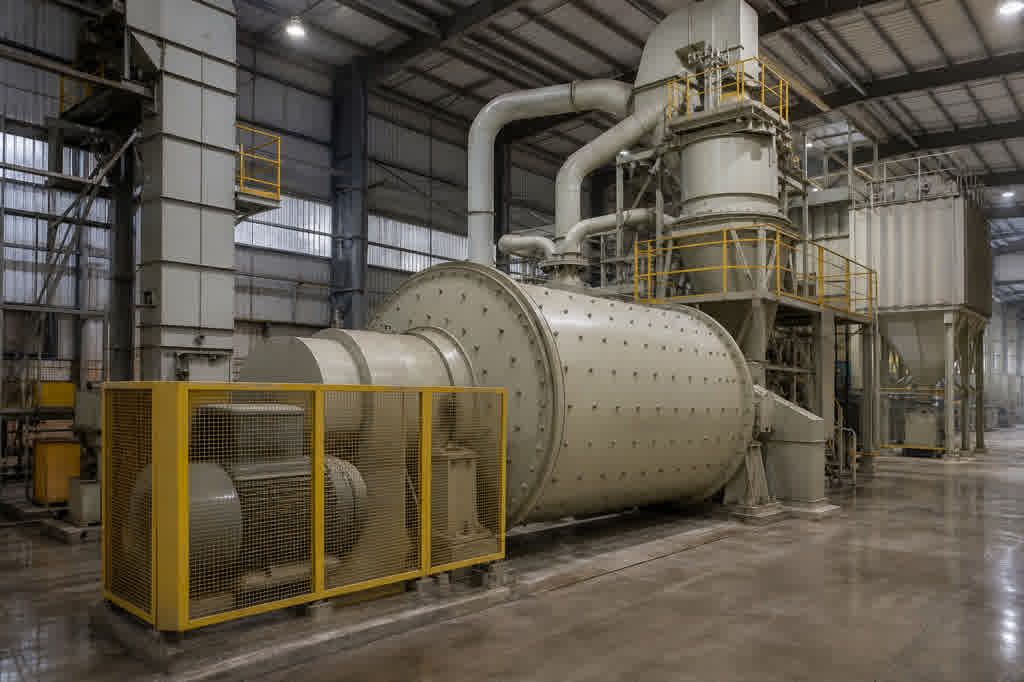
Cement finish-grinding hall with closed-circuit ball mill and separator

Asphalt Drum-Dryer Baghouse Differential Pressure

The cost: Baghouse pressure can change with exhaust flow, aggregate moisture, exhaust temperature, fan operation, pulse-cleaning performance, production rate, mix type, and instrumentation. Reviewing alarms without that context can send the team toward a single cause too quickly.

What Grayson does: Analyzes a prepared asphalt-plant dataset containing baghouse differential pressure, inlet or exhaust temperature, aggregate moisture where measured, production rate, exhaust-fan speed, mix type, pulse-cleaning or compressed-air context where available, and operating-state flags. Anomaly, correlation, and period comparison can identify recurring event windows and the recorded conditions that differ from normal production.

Ask Grayson: “Compare baghouse differential-pressure event windows with normal production at similar rates. How did aggregate moisture, inlet temperature, exhaust-fan speed, and pulse-cleaning context differ?”

Outcome: Help the plant operator prioritize inspection of filter bags, pulse-air supply, valves, temperature and pressure sensors, fan operation, and material conditions.

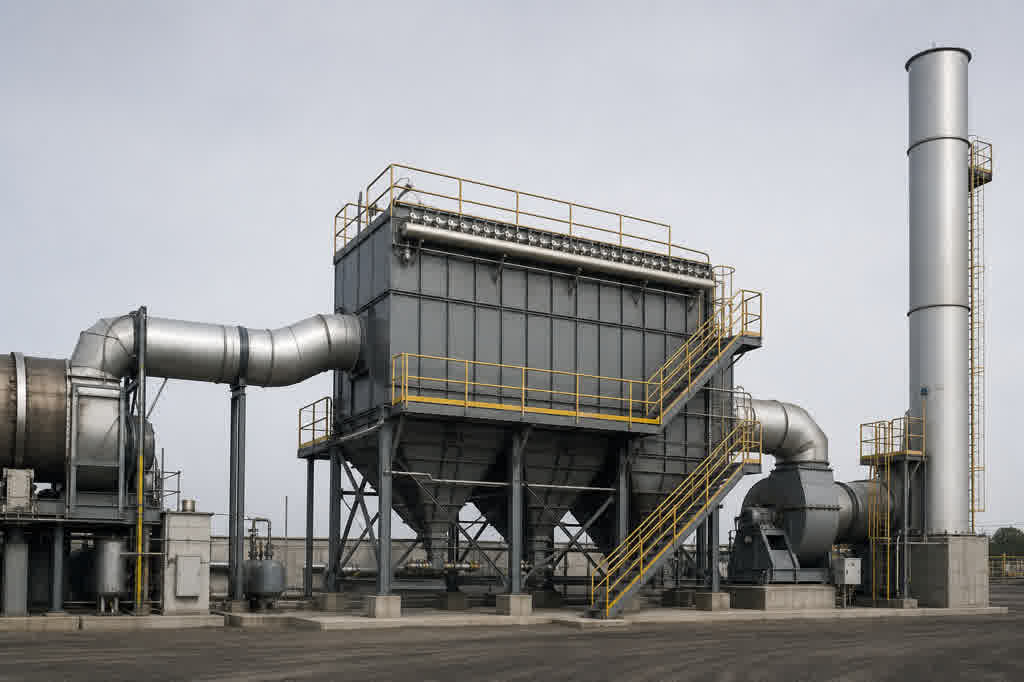
Hot-mix asphalt plant drum-dryer exhaust duct and pulse-jet baghouse

Grayson TimeSeries

Grayson TimeSeries is a Microsoft Teams app that lets engineers and operators individually chat with their industrial process data for quick insights with a deterministic and auditable AI agent.

MICROSOFT COPILOT

Powered by Microsoft Copilot and available in Teams, making it easy to use within your Microsoft 365 ecosystem.

PROCESS DATA ANALYTICS

Grayson TimeSeries prepares and validates your process data automatically, detects anomalies, makes forecasts and establishes correlations.

FAQ

Answers to help you get started faster.

Real stories from teams who streamlined their workflow and delivered more with less.

What is Grayson TimeSeries?

Grayson TimeSeries is a no-code industrial time-series analytics application for Microsoft Teams. Users can upload one prepared CSV or Excel file, ask questions in plain language, investigate anomalies, correlations, lead-lag relationships, trends, forecasts, and operating periods, and generate reproducible charts and reports.

How is Grayson different from a DCS, historian, or specialized plant-performance platform?

A DCS, PLC, historian, quality system, and specialized performance platform remain essential for control, storage, monitoring, alarms, product records, and established engineering workflows. Grayson complements those systems by making ad hoc historical investigation easier for individual users inside Microsoft Teams. It does not replace real-time control or OEM engineering tools.

Can Grayson analyze exports from my existing cement or asphalt systems?

Yes, when the required data can be exported and prepared as one time-stamped CSV or Excel file. Data from separate DCS, historian, laboratory, quality, meter, maintenance, or asphalt-controller sources must be aligned and combined before upload. Signal availability and export access vary by plant, equipment, sensor, configuration, and license.

Does Grayson calculate specific power, circulating load, or normalized pressure automatically?

No. Engineering variables such as kWh/t, circulating-load ratio, normalized differential pressure, stable-operation flags, product-grade labels, and maintenance periods should be calculated or assigned before upload. Grayson can then analyze those prepared fields using deterministic methods.

What preheater and baghouse patterns can Grayson surface?

Grayson can identify historical pressure trends, anomalies, and associations under comparable operating conditions. Those results help teams focus inspection of the gas path, filter bags, pulse-air system, instrumentation, fans, valves, and material context.

Which quality and control decisions stay with plant workflows?

Laboratory testing, cement or asphalt quality certification, environmental compliance, operating limits, and controller settings remain with qualified engineering, quality, maintenance, and operating review. Use Grayson analysis as evidence for those decisions, not as a substitute for them.